
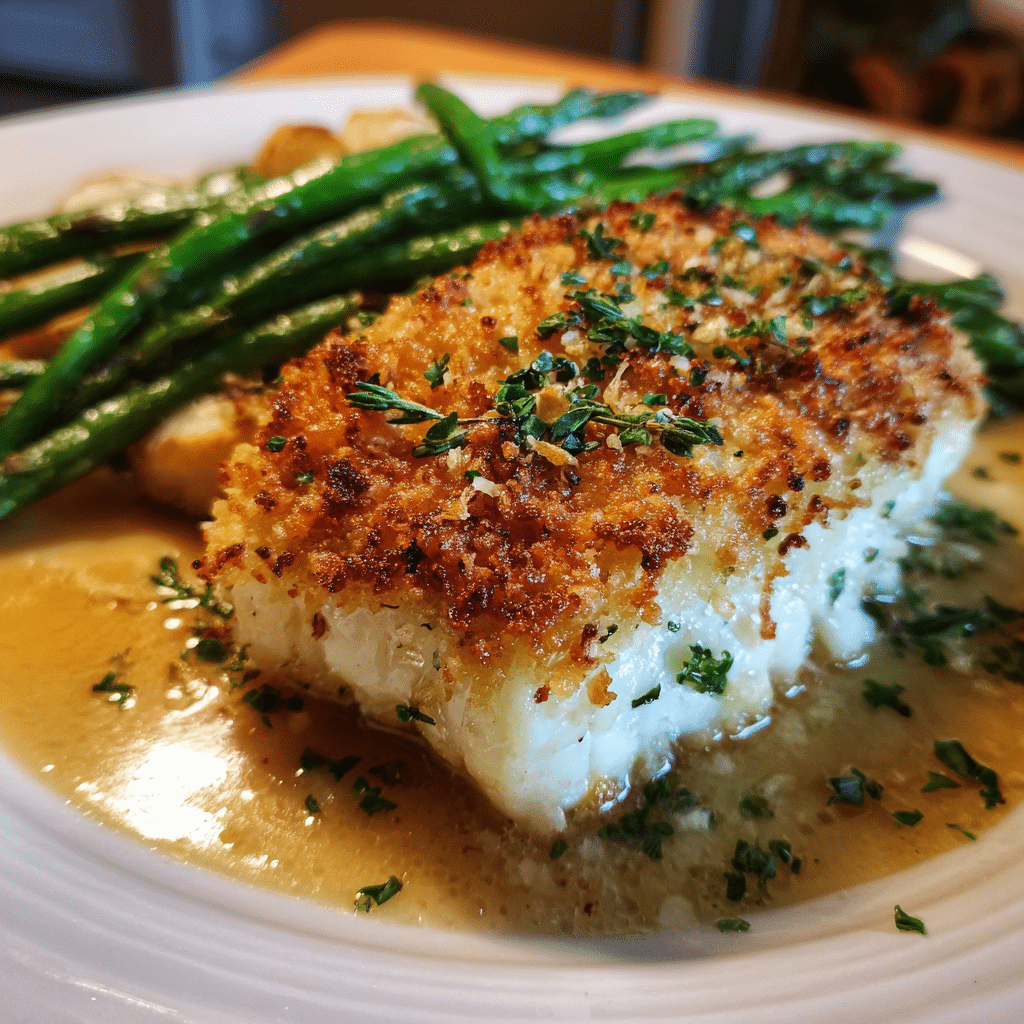
Garlic Parmesan Crusted Halibut transformed my weeknight dinners the moment I discovered it during a coastal trip to Seattle. I’m Emeli, and at FoodFansy, I believe that restaurant-quality fish doesn’t require culinary school just a few quality ingredients and a hot oven. I remember standing in Pike Place Market, watching a fishmonger fillet fresh halibut with such care, and thinking: “This delicate fish deserves something special, but simple.” That evening, I created this recipe in a tiny Airbnb kitchen, and the golden, crispy crust against tender, flaky fish became an instant obsession.
Tired of rubbery, overcooked fish that tastes like cardboard? This Garlic Parmesan Crusted Halibut delivers a buttery crust with bold garlic flavor and a melt-in-your-mouth texture every single time. As someone who’s cooked fish in professional kitchens and home stoves across three continents, I’ve learned that halibut is forgiving, luxurious, and surprisingly beginner-friendly when you follow a few key steps.
In this guide, you’ll discover how to select the freshest halibut, master the perfect panko-parmesan crust, nail your oven temperature, and avoid the most common mistakes that leave fish dry or bland. Let’s turn your kitchen into a five-star seafood restaurant.
Why This Garlic Parmesan Crusted Halibut Recipe Works
This isn’t just another baked fish recipe it’s a flavor-packed technique that guarantees success. Here’s what makes this Garlic Parmesan Crusted Halibut foolproof:
- Takes just 20 minutes total – Perfect for busy weeknights when you want something impressive without the stress
- Uses simple pantry ingredients – Parmesan, garlic, panko, and olive oil create restaurant-quality results
- Naturally healthy and protein-rich – Halibut is lean, omega-3 rich, and naturally low-carb (perfect for keto and paleo diets)
- The crust stays crispy – No soggy breadcrumbs here; the panko-parmesan mixture creates an irresistible golden crunch
- Incredibly versatile – Pair it with everything from roasted vegetables to creamy risotto for any occasion
Choosing the Right Halibut for Garlic Parmesan Crusted Halibut
The quality of your fish makes or breaks this recipe. Here’s everything you need to know about selecting halibut that will make your guests think you’re a professional chef.
Best Halibut for This Recipe
Fresh halibut fillets work beautifully for this Garlic Parmesan Crusted Halibut because of their firm, meaty texture and mild, slightly sweet flavor. Look for fillets that are about one inch thick—this ensures they cook evenly and stay moist under the crust. Halibut’s dense texture holds up perfectly to the weight of the breadcrumb topping without falling apart, unlike more delicate fish like sole or tilapia.
Buying Tips
When shopping for halibut, your eyes and nose are your best tools. The flesh should be translucent white with a slight sheen, never dull or yellowing. It should smell clean and ocean-fresh, not fishy or ammonia-like. Press the fillet gently with your finger—it should bounce back, not leave an indentation. Don’t hesitate to ask your fishmonger when the halibut arrived; ideally, you want fish that came in that day or the day before. If you’re buying frozen, look for individually vacuum-sealed fillets with no ice crystals or freezer burn.
Substitutions
If halibut isn’t available or exceeds your budget, cod and sea bass make excellent substitutes in this recipe. Cod has a similar flaky texture and mild flavor, though it’s slightly more delicate. Sea bass offers a buttery richness that pairs beautifully with the garlic-parmesan crust. You can also use mahi-mahi for a slightly firmer bite or even thick salmon fillets if you prefer a richer, fattier fish (though the flavor profile will be bolder). Just adjust cooking time slightly based on thickness.
Ingredients & Prep for Garlic Parmesan Crusted Halibut
Setting yourself up for success starts with proper preparation. This Garlic Parmesan Crusted Halibut requires minimal ingredients but maximum attention to detail.
Meat Prep Essentials
Start by patting your halibut fillets completely dry with paper towels this is the most crucial step for achieving a crispy crust. Any moisture on the surface will create steam in the oven, making your topping soggy instead of golden. Season both sides lightly with salt and freshly cracked black pepper, then let the fillets rest at room temperature for ten minutes before baking. This ensures even cooking from edge to center, preventing that dreaded raw middle with overcooked edges.
Marinades/Rubs: The Dry Crust Mix
The magic of this recipe lives in the crust. Combine one cup of grated Parmesan cheese (use the good stuff, not the powdered kind in the green can), three tablespoons of minced fresh garlic, one cup of panko breadcrumbs, three tablespoons of olive oil, two teaspoons of dried parsley, and half a teaspoon of black pepper. Mix everything together until the texture resembles wet sand—the olive oil should coat the breadcrumbs just enough to help them crisp up without making them greasy. Once you’ve pressed this mixture generously onto your halibut fillets, let it sit for five minutes before baking. This allows the crust to adhere properly and creates a protective barrier that keeps the fish incredibly moist.
Pantry Staples
Beyond the crust ingredients, you’ll need olive oil for moisture and richness, fresh garlic for that bold aromatic backbone, and lemon zest for brightness that cuts through the richness of the Parmesan. These three elements work together to create layers of flavor—the olive oil carries the garlic’s essence throughout the crust, while the lemon zest adds a subtle citrus note that makes the entire dish feel lighter and more vibrant. Keep these staples on hand and you’ll always be twenty minutes away from an impressive seafood dinner.
Step-by-Step Cooking Instructions for Garlic Parmesan Crusted Halibut
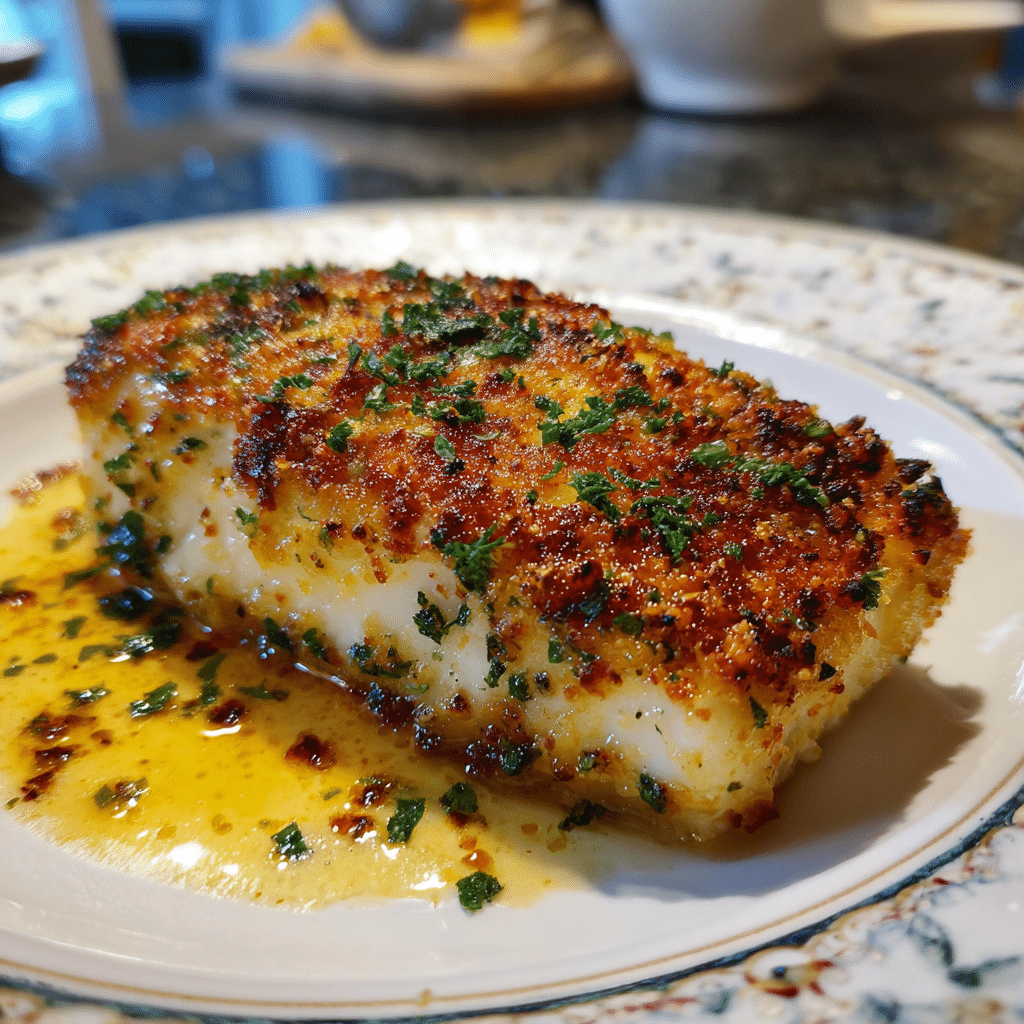
Follow these precise steps and you’ll achieve perfectly cooked, restaurant-quality fish with a crust so good you’ll want to make extra just to snack on.
Pre-Cooking Prep for Garlic Parmesan Crusted Halibut
Preheat your oven to 400°F (200°C) this temperature is the sweet spot for cooking halibut quickly while developing a golden crust. While the oven heats, pat your halibut fillets completely dry with paper towels and season lightly with salt and pepper on both sides. Line a baking sheet with parchment paper or lightly grease it with olive oil to prevent sticking. Arrange your fillets on the sheet with at least two inches of space between them to allow hot air to circulate. This preparation might seem simple, but these small details prevent common mistakes like uneven cooking or fish that sticks to the pan.
Cooking Method for Garlic Parmesan Crusted Halibut
Place your prepared fillets on the lined baking sheet. Take your garlic-parmesan-panko mixture and press it firmly onto the top of each fillet, creating an even layer about a quarter-inch thick. Use your hands to really pack it down—this ensures the crust stays put and doesn’t slide off during baking. Slide the baking sheet into your preheated oven on the middle rack and bake for twelve to fifteen minutes, depending on the thickness of your fillets. The crust should turn a beautiful golden brown, and you’ll see the edges of the fish turning opaque white. Resist the urge to flip the fish or disturb it during cooking; the crust needs undisturbed heat from above to crisp properly.
Doneness Check for Garlic Parmesan Crusted Halibut
Your halibut is perfectly cooked when it flakes easily with a fork and reaches an internal temperature of 145°F (63°C) at the thickest part. Insert an instant-read thermometer horizontally into the center of the fillet to check. The fish should look opaque throughout with just a hint of translucency in the very center—it will finish cooking during the resting period. If you don’t have a thermometer, gently press the fish with a fork; it should separate into large, moist flakes without resistance. Overcooked halibut becomes dry and chalky, so err on the side of slightly underdone since carryover cooking will finish the job.
Resting Garlic Parmesan Crusted Halibut
Once out of the oven, let your fish rest on the baking sheet for three to five minutes before serving. This resting period allows the juices to redistribute throughout the fillet, ensuring every bite is moist and tender. The crust will also set slightly, making it easier to transfer the fish to plates without it falling apart. Use a wide spatula to carefully lift each fillet, supporting it from underneath to keep that gorgeous crust intact.
Pro Tips for Perfect Garlic Parmesan Crusted Halibut
After making this recipe dozens of times and teaching it to home cooks around the world, I’ve learned the small tricks that separate good from extraordinary.
Avoiding Dry Halibut with Garlic Parmesan Crusted Halibut
The number one mistake people make with halibut is overcooking it. Because it’s such a lean fish, even an extra two minutes in the oven can turn it from tender to tough. Set a timer and start checking at the twelve-minute mark, especially if your fillets are on the thinner side. Another secret: drizzle a tiny bit of melted butter or olive oil over the crust during the last two minutes of baking. This adds richness and helps the breadcrumbs achieve an even deeper golden color. Finally, never skip the resting period—those few minutes make a significant difference in moisture retention.
Tool Recommendations for Garlic Parmesan Crusted Halibut
A good instant-read thermometer is your best friend when cooking fish. I love the ThermoWorks ThermoPop for its accuracy and speed. For pressing the crust onto the fish, use your clean hands rather than a spoon—you’ll get much better adhesion. A sturdy, rimmed baking sheet (preferably not nonstick, which can prevent proper browning) lined with parchment paper makes cleanup effortless. If you want to take this recipe to the next level, finish it under the broiler for thirty seconds to get an extra-crispy, restaurant-style crust just watch it like a hawk to prevent burning.
Storage & Reheating Garlic Parmesan Crusted Halibut
While this dish is best enjoyed fresh from the oven, leftovers can be stored in an airtight container in the refrigerator for up to two days. To reheat, place the fish on a baking sheet in a 350°F oven for about eight minutes. Avoid the microwave, which will turn the crust soggy and the fish rubbery. You can also flake leftover halibut into a salad, pasta, or fish taco for a delicious second-day meal. The crust won’t be as crispy after reheating, but the flavor remains wonderful.
Flavor Variations for Garlic Parmesan Crusted Halibut
One of my favorite things about this recipe is how easily it adapts to different flavor profiles and dietary needs. Here are some twists I’ve developed over the years.
Spicy Garlic Parmesan Crusted Halibut Twist
Add a half teaspoon of red pepper flakes or a teaspoon of cayenne pepper to your crust mixture for a spicy kick that plays beautifully against the rich Parmesan. I’ve also mixed in a tablespoon of finely minced jalapeño for guests who love heat. For a smoky-spicy version, try adding a teaspoon of smoked paprika and a pinch of chipotle powder. The key is balancing the heat so it enhances rather than overwhelms the delicate fish.
Keto and Paleo Garlic Parmesan Crusted Halibut
This recipe is naturally low-carb and keto-friendly as written, but if you want to reduce carbs even further, swap the panko breadcrumbs for crushed pork rinds or almond flour. The texture will be slightly different pork rinds give an extra-crispy, almost chicharrón-like crunch, while almond flour creates a more delicate, nutty crust. Both versions are grain-free and paleo-approved. Just increase the Parmesan slightly to help bind everything together if you’re using almond flour.
Global Flavors for Garlic Parmesan Crusted Halibut
For an Italian herb twist, add a tablespoon of fresh chopped basil and a teaspoon of dried oregano to your crust mixture, and finish with a squeeze of lemon. If you’re craving Mediterranean flavors, mix in some sun-dried tomatoes and substitute feta for half the Parmesan. For an Asian-inspired version, replace the parsley with cilantro, add a teaspoon of grated fresh ginger to the crust, and serve with a soy-lime drizzle. My favorite global variation is a Greek version with lemon zest, fresh dill, and a dollop of tzatziki sauce on top.
| Variation | Key Ingredients | Best Served With | Cooking Time Adjustment |
|---|---|---|---|
| Classic Garlic Parmesan | Parmesan, garlic, panko, parsley | Roasted asparagus, mashed potatoes | 12-15 minutes at 400°F |
| Spicy Chipotle | Parmesan, chipotle powder, cayenne | Black bean salad, cilantro lime rice | 12-15 minutes at 400°F |
| Italian Herb | Parmesan, basil, oregano, sun-dried tomatoes | Caprese salad, garlic bread | 12-15 minutes at 400°F |
| Keto Pork Rind Crust | Parmesan, crushed pork rinds, garlic | Cauliflower mash, sautéed spinach | 10-12 minutes at 400°F (crisps faster) |
| Mediterranean Feta-Dill | Feta, Parmesan, fresh dill, lemon | Greek salad, roasted tomatoes | 12-15 minutes at 400°F |
Serving Suggestions for Garlic Parmesan Crusted Halibut
This elegant fish deserves equally thoughtful accompaniments that complement rather than compete with its delicate flavor and rich crust.
Pair your Garlic Parmesan Crusted Halibut with creamy mashed potatoes or garlic butter rice to soak up any delicious juices from the fish. Roasted or grilled asparagus adds a slight char and bitterness that balances the richness of the Parmesan. For a lighter option, serve it over a bed of arugula dressed simply with lemon juice and olive oil—the peppery greens cut through the buttery crust beautifully. Roasted cherry tomatoes, sautéed green beans with almonds, or a warm quinoa pilaf also make excellent sides.
For wine pairings, choose a crisp white wine like Chardonnay or Sauvignon Blanc that won’t overpower the fish. The buttery notes in Chardonnay complement the Parmesan crust, while Sauvignon Blanc’s acidity cuts through the richness. If you prefer beer, a light lager or Belgian witbier works wonderfully the subtle citrus notes in wheat beers echo the lemon brightness in the dish. For a non-alcoholic option, sparkling water with fresh lemon or a crisp iced white tea cleanses the palate between bites.
FAQs About Garlic Parmesan Crusted Halibut
Over the years, I’ve answered these questions countless times from home cooks mastering this recipe. Here are the most common concerns and their solutions.
Can I use frozen halibut for Garlic Parmesan Crusted Halibut?
Absolutely, but proper thawing is essential for success. Place frozen fillets in the refrigerator overnight to thaw slowly and evenly. Never thaw fish at room temperature or in warm water, as this can encourage bacterial growth and create a mushy texture. Once thawed, pat the fillets exceptionally dry with paper towels—frozen fish releases more moisture than fresh, so this step is even more critical. The cooking time and method remain exactly the same.
How do I fix overcooked Garlic Parmesan Crusted Halibut?
Unfortunately, there’s no way to truly “fix” overcooked fish and restore its moisture, but you can make it more palatable. Flake the fish and mix it with a creamy sauce like lemon-butter sauce, aioli, or a Greek yogurt-dill mixture to add back moisture. Use it in fish tacos, pasta, or a fish salad where the added ingredients will compensate for the dryness. The best fix is prevention—invest in an instant-read thermometer and pull the fish at exactly 145°F.
Is Garlic Parmesan Crusted Halibut safe for pregnant women?
Yes, halibut is considered a safe fish choice during pregnancy because it’s low in mercury compared to larger predatory fish like swordfish or shark. However, ensure your fish is cooked to an internal temperature of 145°F to eliminate any potential bacteria or parasites. Pregnant women should avoid raw or undercooked fish entirely. The FDA recommends pregnant women eat eight to twelve ounces of low-mercury fish per week, and halibut fits perfectly within these guidelines.
Can I make the crust ahead of time for Garlic Parmesan Crusted Halibut?
Yes, you can prepare the crust mixture up to two days in advance and store it in an airtight container in the refrigerator. This actually helps the flavors meld together beautifully. When you’re ready to cook, press the cold mixture onto your room-temperature fish and proceed with the recipe as written. You can also press the crust onto the raw fish, cover it tightly with plastic wrap, and refrigerate for up to four hours before baking. Just add an extra minute or two to the cooking time if you’re putting cold fish directly into the oven.
What’s the best way to remove skin from halibut for this recipe?
Most halibut fillets are sold skinless, but if yours has skin, it’s easy to remove. Place the fillet skin-side down on a cutting board. Using a sharp, flexible knife, make a small cut between the flesh and skin at one end. Hold the skin firmly with one hand (a paper towel helps with grip) and slide the knife along the skin at a slight angle, using a gentle sawing motion. The skin should separate cleanly from the flesh. For this recipe, I actually recommend leaving the skin on if it’s there and placing the fillet skin-side down on your baking sheet—the skin protects the bottom from drying out and peels off easily after cooking.
Conclusion
This Garlic Parmesan Crusted Halibut has become one of the most-requested recipes in my kitchen, and I know it will quickly become a staple in yours too. There’s something deeply satisfying about pulling a golden, crispy-topped fish from the oven and watching everyone’s eyes light up at the table. It proves that impressive cooking doesn’t require complicated techniques or hours of preparation sometimes the simplest combinations create the most memorable meals.
Fire up your oven tonight and give this recipe a try. Whether it’s a Tuesday night dinner or a special celebration, this dish delivers restaurant-quality results with home-kitchen ease. Once you master the technique, you’ll find yourself adapting it to whatever fish is freshest at your market and experimenting with your own flavor combinations.
If you enjoyed this recipe, be sure to share it with your friends or save it for later! I’d love to see your unique twist feel free to post your photos on Pinterest!
Garlic Parmesan Crusted Halibut: Ultimate 5-Step Crispy Win
- Total Time: 30
- Yield: 4 1x
Description
This Garlic Parmesan Crusted Halibut features tender, flaky fish topped with a golden, crispy panko-parmesan crust infused with garlic and herbs. Ready in just 20 minutes, it’s a restaurant-quality dish that’s perfect for weeknight dinners or special occasions.
Ingredients
4 halibut fillets (6 oz each, about 1 inch thick)
1 cup grated Parmesan cheese (freshly grated, not pre-packaged)
3 tablespoons minced fresh garlic
1 cup panko breadcrumbs
3 tablespoons olive oil
2 teaspoons dried parsley
1/2 teaspoon black pepper
1/2 teaspoon salt (for seasoning fish)
1/4 teaspoon black pepper (for seasoning fish)
1 teaspoon lemon zest (optional, for brightness)
Lemon wedges (for serving)
Instructions
1. Preheat your oven to 400°F (200°C). Line a baking sheet with parchment paper or lightly grease it with olive oil.
2. Pat the halibut fillets completely dry with paper towels. Season both sides lightly with salt and pepper. Let rest at room temperature for 10 minutes.
3. In a medium bowl, combine the grated Parmesan cheese, minced garlic, panko breadcrumbs, olive oil, dried parsley, and 1/2 teaspoon black pepper. Mix until the texture resembles wet sand and the breadcrumbs are evenly coated with oil.
4. Place the halibut fillets on the prepared baking sheet, spacing them at least 2 inches apart. Press the crust mixture firmly onto the top of each fillet, creating an even layer about 1/4 inch thick. Let sit for 5 minutes.
5. Bake in the preheated oven for 12-15 minutes, until the crust is golden brown and the fish flakes easily with a fork. The internal temperature should reach 145°F (63°C).
6. Remove from the oven and let rest for 3-5 minutes before serving. Use a wide spatula to carefully transfer each fillet to plates, keeping the crust intact.
7. Serve immediately with lemon wedges on the side.
Notes
For the crispiest crust, make sure to pat the fish completely dry before seasoning. Any moisture will create steam and make the topping soggy.
Don’t skip the resting period before and after cooking—it ensures even cooking and maximum moisture retention.
If your fillets are thicker than 1 inch, add 2-3 minutes to the cooking time. Thinner fillets may need 1-2 minutes less.
For an extra-crispy crust, place under the broiler for the last 30 seconds of cooking. Watch carefully to prevent burning.
Substitute cod, sea bass, or mahi-mahi if halibut isn’t available. Adjust cooking time based on thickness.
For a keto/paleo version, replace panko with crushed pork rinds or almond flour. Reduce cooking time by 2 minutes if using pork rinds as they crisp faster.
Store leftovers in an airtight container in the refrigerator for up to 2 days. Reheat in a 350°F oven for 8 minutes to maintain texture.
- Prep Time: 15
- Cook Time: 15
- Category: Main Course
- Method: Baking
- Cuisine: American
Nutrition
- Serving Size: 1 fillet (6 oz)
- Calories: 385
- Sugar: 1
- Sodium: 520
- Fat: 18
- Saturated Fat: 5
- Unsaturated Fat: 11
- Trans Fat: 0
- Carbohydrates: 12
- Fiber: 1
- Protein: 42
- Cholesterol: 95
Keywords: garlic parmesan halibut, crusted halibut, baked halibut, parmesan crusted fish, easy halibut recipe, weeknight fish dinner, healthy fish recipe, panko crusted halibut