
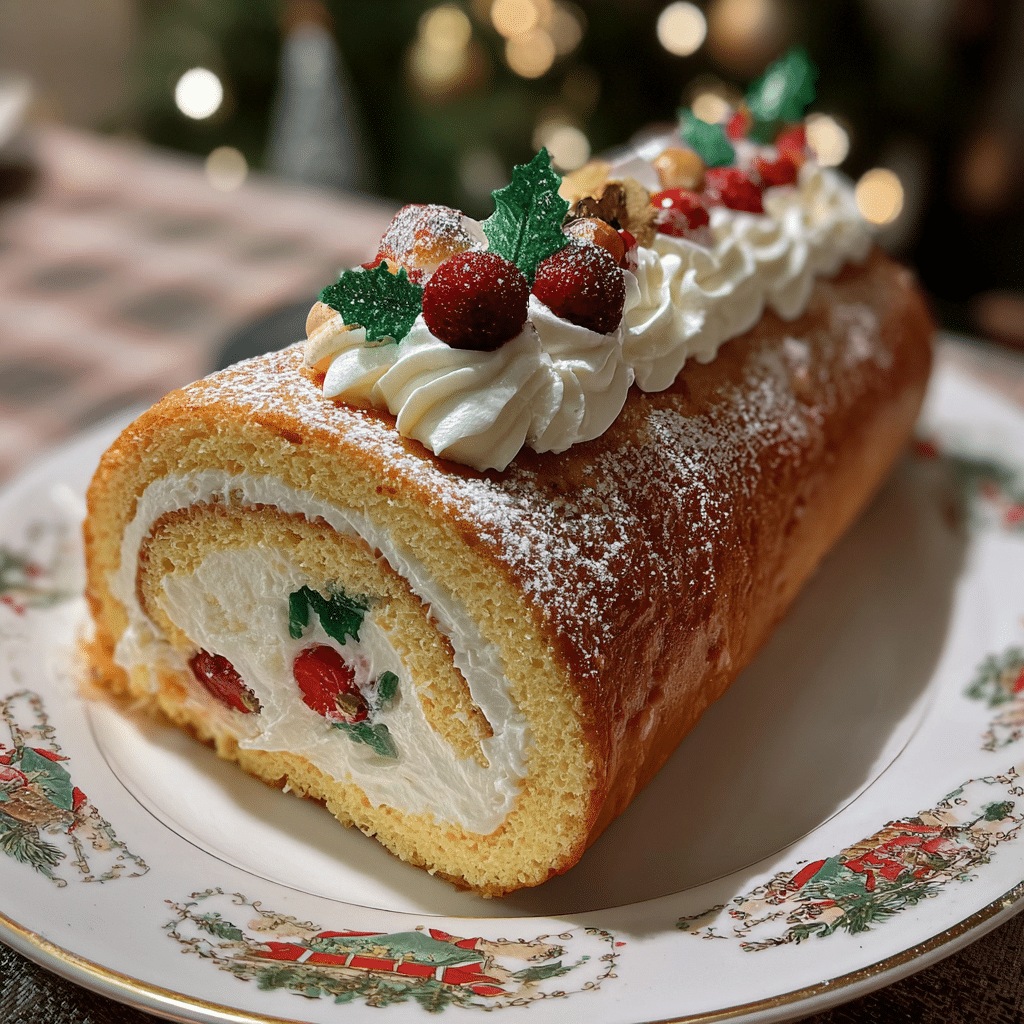
Christmas Roll Cake always reminds me of the first winter I spent in my grandmother’s kitchen, watching her transform simple ingredients into a show-stopping dessert that became the centerpiece of our holiday table. Are you tired of holiday desserts that crack, dry out, or fall apart when you try to roll them? I know the frustration of spending hours on a festive cake only to have it crumble before your guests arrive.
This Christmas Roll Cake recipe delivers a perfectly moist, cloud-like sponge that rolls beautifully every single time, filled with luscious whipped cream and finished with festive decorations. As someone who’s spent years perfecting the art of rolled cakes in both professional kitchens and home settings, I’ve discovered the secrets that make the difference between a disappointing disaster and a stunning success.
In this guide, I’ll walk you through everything you need to know: selecting the right ingredients for that tender crumb, mastering the rolling technique without cracks, pro tips for picture-perfect presentation, and answers to your most common questions. Let’s create a Christmas Roll Cake that will have everyone asking for seconds and the recipe.
Why This Christmas Roll Cake Recipe Works
This Christmas Roll Cake brings together the elegance of a classic European dessert with the simplicity that busy home cooks need during the holiday season. Here’s why it’s become a favorite in kitchens around the world:
- Uses everyday ingredients you likely already have – no specialty items or expensive extracts required
- The sponge bakes in just 10-12 minutes – perfect when you’re juggling multiple holiday dishes
- Incredibly forgiving technique – my warm-rolling method prevents the dreaded cracks that ruin most roll cakes
- Make-ahead friendly – prepare it a day in advance and it actually tastes better after the flavors meld
- Endlessly customizable – swap fillings, add festive flavors, or decorate to match your holiday theme
Choosing the Right Ingredients for Christmas Roll Cake
The beauty of a Christmas Roll Cake lies in its simplicity, but choosing quality ingredients makes all the difference between an ordinary dessert and an extraordinary one.
Essential Egg Selection
Eggs are the foundation of your sponge cake’s structure and texture. For this Christmas Roll Cake, use fresh, large eggs at room temperature. The whites whip to greater volume when they’re not cold, creating that signature airy texture. Separate your eggs carefully – even a drop of yolk in the whites will prevent them from reaching proper peaks. I learned this lesson the hard way during my first pastry internship when an entire batch failed to whip.
Cream and Dairy Components
Your filling’s success depends on using heavy whipping cream with at least 36% fat content. Lower-fat creams won’t hold their structure, especially if you’re making this ahead. Buy cream that’s as fresh as possible and keep it well-chilled until you’re ready to whip. For the vanilla extract, pure vanilla makes a noticeable difference over imitation, adding depth and warmth that complements the delicate sponge.
Flour and Leavening Choices
All-purpose flour works perfectly for this Christmas Roll Cake, but make sure to sift it before measuring. This removes lumps and aerates the flour, contributing to that light, tender crumb. Your baking powder should be fresh – test it by adding a teaspoon to hot water. If it doesn’t fizz vigorously, replace it. Old leavening agents are one of the most common reasons cakes fail to rise properly.
Ingredients & Prep for Christmas Roll Cake
Getting your mise en place right is crucial for a successful Christmas Roll Cake. Since the batter comes together quickly and baking time is short, you want everything measured and ready before you start.
Sponge Cake Prep Essentials
Start by separating your eggs carefully, placing whites in a completely clean, grease-free bowl. Even the tiniest trace of oil will prevent proper whipping. Bring the egg yolks to room temperature – they’ll incorporate more smoothly into your batter. Whip egg whites to soft peaks for that airy texture that makes this cake so special. This means when you lift the beaters, the peaks curl over gently rather than standing straight up. Line your baking pan properly with parchment paper, leaving an overhang on the sides. This prevents sticking and makes it easy to lift the finished cake out. I like to lightly grease the parchment too, just for extra insurance.
Filling Ingredients
The filling for your Christmas Roll Cake should be silky, stable, and not too sweet. Combine cold heavy whipping cream with powdered sugar and vanilla extract. The powdered sugar dissolves more easily than granulated and includes cornstarch, which helps stabilize the whipped cream. Start with your mixer on low speed to prevent splattering, then gradually increase to medium-high until you reach stiff peaks. Here’s my pro trick: chill the filling for 20-30 minutes after whipping. This firms it up beautifully, making it much easier to spread evenly without tearing your delicate sponge.
Pantry Staples
You’ll need neutral oil or melted butter for moisture and tenderness. I prefer neutral oil because it keeps the cake soft even when chilled, while butter can make it slightly firmer. Add baking powder for lift and fine salt to balance the sweetness and enhance all the other flavors. These simple ingredients work together to create the perfect canvas for your festive filling.
Step-by-Step Cooking Instructions for Christmas Roll Cake
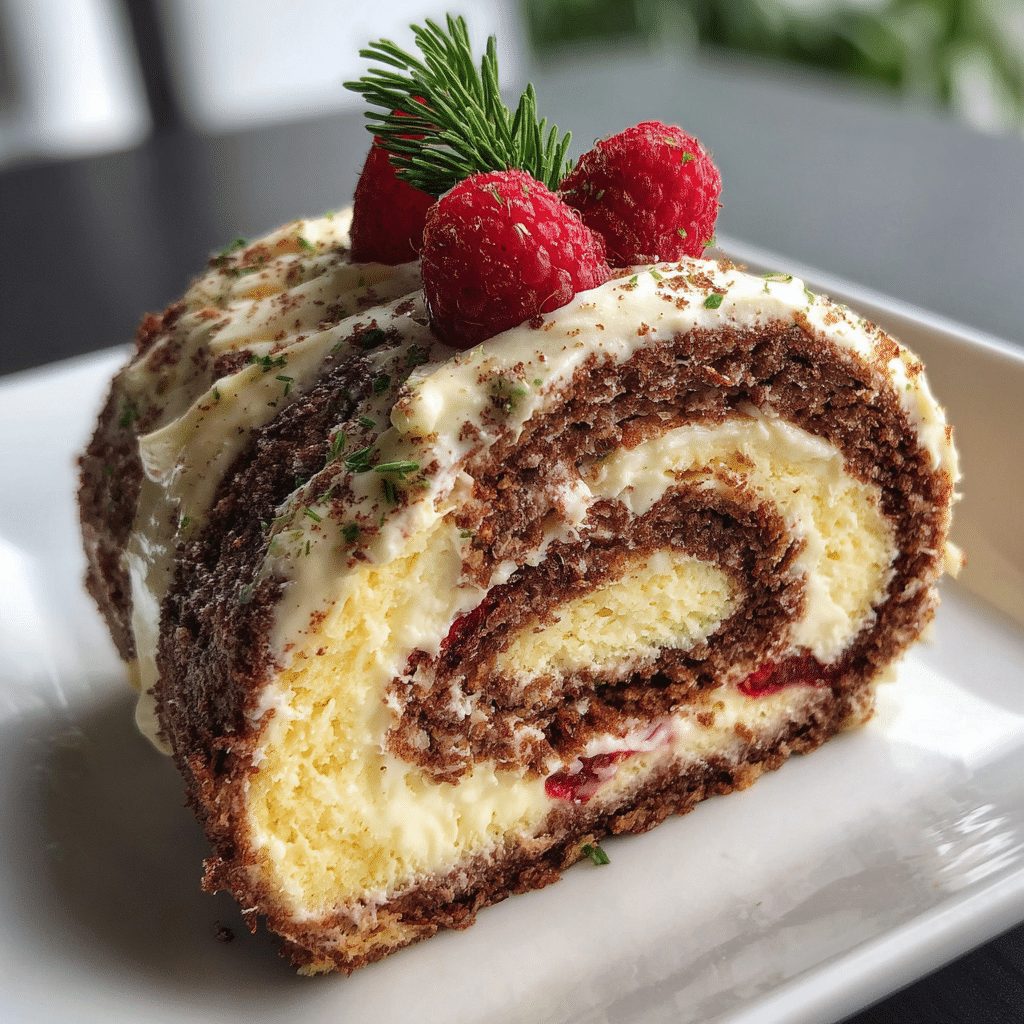
The key to a perfect Christmas Roll Cake is understanding that timing and temperature control everything. Let me guide you through each critical stage.
Pre-Cooking Prep – Christmas Roll Cake
Begin by preheating your oven to 180°C (350°F). Position the rack in the center of the oven for even heat distribution. While the oven heats, line your baking tray with parchment paper, making sure it fits snugly into the corners. Bring all your ingredients to room temperature – this is especially important for eggs, which whip better and incorporate more smoothly when they’re not cold. Measure everything precisely and have it within arm’s reach. Once you start mixing, things move quickly.
Cooking Method – Christmas Roll Cake
Bake the sponge at 180°C (350°F) for 10-12 minutes until the surface is lightly golden and springy to the touch. Resist the urge to open the oven door during the first 8 minutes – the sudden temperature drop can cause the cake to collapse. Watch carefully near the end of baking time. The cake should look set and slightly pull away from the edges of the pan. Every oven is different, so yours might need a minute more or less. Trust your eyes and the touch test more than the timer.
Doneness Check – Christmas Roll Cake
The cake should bounce back gently when you press the center with your fingertip, leaving no indentation. The surface will have a light golden color, and you shouldn’t see any wet batter when you peek at the edges. Another good indicator is the aroma – when you smell that wonderful cake scent wafting from the oven, it’s usually ready. If you’re uncertain, it’s better to slightly underbake than overbake. A slightly underdone cake will be moist and pliable, while an overbaked one will crack when you try to roll it.
Resting & Rolling – Christmas Roll Cake
This is where most people panic, but I’m going to share the technique that changed everything for me. The moment your cake comes out of the oven, run a knife around the edges to loosen it. Immediately flip it onto a clean kitchen towel dusted lightly with powdered sugar. Peel off the parchment paper carefully. While the cake is still warm and pliable, roll it up tightly in the towel, starting from the short end. This step is crucial – rolling while warm trains the cake to hold that shape without cracking. Let it cool completely in this rolled position, about 30 minutes. When it’s fully cooled, gently unroll it, spread your chilled filling evenly, leaving a small border around the edges, then roll it back up without the towel. The cake will remember its shape and roll smoothly. Transfer it seam-side down to your serving platter and refrigerate for at least an hour before decorating and serving.
Pro Tips for Perfect Christmas Roll Cake
After making countless roll cakes over the years, I’ve gathered insights that separate good results from spectacular ones.
Avoiding Cracks and Tears in Christmas Roll Cake
The number one cause of cracking is overbaking, which dries out the cake and makes it brittle. Pull it from the oven when it’s just done, even if it seems slightly underdone in the very center. Don’t let the cake cool in the pan – this causes the surface to dry out. Roll it immediately while it’s warm and flexible. If small cracks do appear, don’t worry. A dusting of powdered sugar, a drizzle of chocolate, or festive decorations will cover them beautifully. I once had a cake crack right down the middle at a holiday party, but after decorating with sugared cranberries and rosemary, nobody could tell.
Essential Tool Recommendations for Christmas Roll Cake
Invest in a good offset spatula for spreading the filling evenly without tearing the delicate sponge. A stand mixer or hand mixer with a whisk attachment makes whipping egg whites and cream effortless. Use a half-sheet pan (approximately 13×18 inches) for the ideal cake thickness. A clean, lint-free kitchen towel is essential for the rolling process – avoid terry cloth, which can leave texture marks. Finally, a fine-mesh sieve for dusting powdered sugar creates that professional finish.
Storage & Reheating Christmas Roll Cake
Store your finished Christmas Roll Cake wrapped in plastic wrap in the refrigerator for up to three days. The flavors actually improve after a day as everything melds together. For longer storage, wrap the unfilled sponge tightly in plastic wrap and aluminum foil, then freeze for up to two months. Thaw overnight in the refrigerator before filling. Don’t freeze the filled cake, as the cream can become watery when thawed. There’s no need to reheat – this cake is meant to be enjoyed chilled, which also makes it perfect for holiday buffets.
Flavor Variations for Christmas Roll Cake
One of the joys of mastering this Christmas Roll Cake base is discovering all the ways you can customize it to suit your taste and traditions.
Festive Holiday Twists for Christmas Roll Cake
Transform your roll cake into a peppermint wonderland by adding crushed candy canes to the whipped cream filling and drizzling melted white chocolate over the top. For a chocolate Yule log variation, add two tablespoons of cocoa powder to the sponge batter and fill with chocolate ganache instead of whipped cream. Create a gingerbread-spiced version by incorporating a teaspoon of cinnamon, half a teaspoon of ginger, and a pinch of cloves into your batter. These warming spices pair beautifully with a cream cheese frosting filling.
International-Inspired Christmas Roll Cake Flavors
Draw inspiration from global holiday traditions to create unique variations. Make a Japanese-style matcha roll by adding two tablespoons of matcha powder to the sponge and filling with sweetened red bean paste mixed with whipped cream. Try an Italian tiramisu-inspired version by brushing the sponge with espresso and rum, then filling with mascarpone cream. For a French bûche de Noël, fill with coffee buttercream and cover the outside with chocolate bark made from melted chocolate spread with a fork for texture.
Dietary Adaptation Options for Christmas Roll Cake
While this recipe is naturally suitable for many diets, you can adapt it further. For a lighter version, fold half Greek yogurt into your whipped cream filling to reduce the fat content while maintaining creaminess. Make it dairy-free by using coconut cream (chilled overnight and whipped) instead of heavy cream. For those avoiding refined sugar, substitute the powdered sugar with a powdered erythritol blend, though the texture may be slightly different. The sponge itself is already gluten-free friendly if you swap all-purpose flour for a good-quality gluten-free blend with xanthan gum.
| Variation | Key Ingredients | Flavor Profile | Best For |
|---|---|---|---|
| Classic Vanilla | Heavy cream, vanilla, powdered sugar | Light, elegant, crowd-pleasing | Traditional celebrations |
| Peppermint Chocolate | Peppermint extract, crushed candy canes, chocolate drizzle | Cool, refreshing, festive | Kids and mint lovers |
| Espresso Tiramisu | Mascarpone, espresso, cocoa powder | Rich, sophisticated, coffee-forward | Adult gatherings |
| Matcha Red Bean | Matcha powder, red bean paste, cream | Earthy, subtly sweet, unique | Adventurous eaters |
| Gingerbread Spice | Cinnamon, ginger, cloves, cream cheese | Warm, spiced, cozy | Traditional holiday fans |
Serving Suggestions for Christmas Roll Cake
Presentation transforms your Christmas Roll Cake from a simple dessert into a memorable centerpiece that captures the magic of the season.
Serve each slice on white or festive plates to make the cake stand out. Dust the top with powdered sugar just before serving to mimic fresh snow. Garnish individual slices with fresh berries like raspberries or strawberries for a pop of color and tart contrast to the sweet cream. Add a sprig of fresh mint or a small piece of candied ginger on the side for visual appeal and complementary flavor.
For an elegant holiday presentation, create a dessert platter with the Christmas Roll Cake as the star, surrounded by small cookies, chocolate truffles, and fresh fruit. Drizzle plates with raspberry or chocolate sauce in decorative patterns before placing the slice. If you’re feeling creative, pipe extra whipped cream rosettes along the top of the roll and top each with a fresh cranberry or gold leaf for luxury.
Pair your Christmas Roll Cake with beverages that enhance the experience. Serve with freshly brewed coffee or espresso for a classic combination that balances the sweetness. Offer dessert wine like Moscato d’Asti or a late-harvest Riesling, whose floral sweetness complements the delicate sponge. For non-alcoholic options, spiced apple cider or peppermint hot chocolate create wonderful holiday pairings. At brunch gatherings, champagne or prosecco adds celebration and cuts through the richness of the cream.
FAQs About Christmas Roll Cake
Can I make Christmas Roll Cake ahead of time?
Absolutely, and I actually recommend it. The cake tastes better after resting in the refrigerator for several hours or even overnight, as the flavors meld and the texture becomes even more tender. Prepare the entire cake up to one day in advance, wrap it well in plastic wrap, and refrigerate. Add any delicate decorations like fresh berries or mint just before serving to keep them looking fresh.
Why did my Christmas Roll Cake crack when I rolled it?
Cracking typically happens for three reasons: the cake was overbaked and dried out, you let it cool completely before the first roll, or you tried to roll it too tightly. Remember to roll the cake while it’s still warm from the oven. This makes it flexible and pliable. If it does crack slightly, don’t panic – these can be hidden with creative decorating. Position the cracks on the bottom, or cover them with powdered sugar, chocolate ganache, or festive toppings.
Can I use frozen eggs for this Christmas Roll Cake recipe?
Fresh eggs work best because their whites whip to the greatest volume, but if you only have frozen eggs, let them thaw completely in the refrigerator overnight and bring them to room temperature before using. Never use eggs that were accidentally frozen in their shells, as this damages the structure and affects performance in baking.
How do I fix an underbaked Christmas Roll Cake?
If you slice into your cooled cake and realize the center is too moist or gummy, you can’t really rebake it without drying it out completely. However, a slightly underbaked cake is actually preferable to an overbaked one for roll cakes, as it will be more flexible. If it’s truly underdone to the point of being wet, reduce the filling and treat it more like a trifle by layering cake pieces with cream in a glass bowl for a deconstructed presentation.
Is Christmas Roll Cake safe during pregnancy?
The main concern in this recipe would be raw eggs, but since all components are fully cooked (the eggs in the cake are baked, and the filling uses only cream, not raw eggs), this Christmas Roll Cake is perfectly safe for pregnant women to enjoy. Just ensure your eggs are fresh and have been properly stored, and that the cream is pasteurized.
Can I make mini Christmas Roll Cakes instead of one large one?
Yes, and they make adorable individual desserts or gifts. Divide the batter between two quarter-sheet pans and reduce baking time to 8-10 minutes. After cooling, cut each cake into rectangles, fill, and roll into individual portions. These mini rolls are perfect for holiday parties where guests want just a taste of something sweet without committing to a large slice.
Conclusion
This Christmas Roll Cake has become more than just a recipe in my kitchen it’s a tradition that brings people together, sparks conversations, and creates those sweet moments we treasure during the holidays. The beauty of this dessert lies not just in its elegant spiral and cloud-like texture, but in how accessible it is for home cooks at any skill level.
Fire up your oven and try this Christmas Roll Cake tonight. Whether you’re serving it at a festive gathering, gifting it to neighbors, or simply treating your family to something special, you’re about to create a dessert that looks as impressive as it tastes. The warm-rolling technique I’ve shared eliminates the intimidation factor, while the simple ingredients keep this recipe approachable.
If you enjoyed this recipe, be sure to share it with your friends or save it for later! I’d love to see your unique twist feel free to post your photos on Pinterest!
Print
Christmas Roll Cake: A Festive Holiday Dessert
- Total Time: 67
- Yield: 10 1x
- Diet: Vegetarian
Description
This festive Christmas Roll Cake features a light, airy sponge filled with silky whipped cream and dusted with powdered sugar. Perfect for holiday celebrations, this elegant dessert is surprisingly easy to make and can be prepared a day ahead. The warm-rolling technique ensures a crack-free cake every time!
Ingredients
For the Sponge Cake:
4 large eggs, separated
3/4 cup (150g) granulated sugar
1 cup (120g) all-purpose flour, sifted
1 teaspoon baking powder
1/4 teaspoon fine salt
3 tablespoons neutral oil or melted butter
1 teaspoon vanilla extract
2 tablespoons milk
For the Whipped Cream Filling:
2 cups (480ml) heavy whipping cream, cold
1/3 cup (40g) powdered sugar, plus extra for dusting
1 teaspoon vanilla extract
For Assembly:
Powdered sugar for dusting
Fresh berries for garnish (optional)
Fresh mint sprigs for garnish (optional)
Instructions
1. Preheat your oven to 180°C (350°F). Line a 13×18-inch half-sheet pan with parchment paper, leaving an overhang on the sides. Lightly grease the parchment.
2. In a large mixing bowl, beat egg yolks with half of the sugar (about 6 tablespoons) until pale and thick, about 3-4 minutes. Add oil, vanilla extract, and milk. Mix until combined.
3. Sift flour, baking powder, and salt into the egg yolk mixture. Gently fold until just combined. Do not overmix.
4. In a separate clean, grease-free bowl, beat egg whites with an electric mixer on medium speed until foamy. Gradually add the remaining sugar and beat until soft peaks form (peaks should curl over gently when you lift the beaters).
5. Gently fold one-third of the egg whites into the batter to lighten it. Then carefully fold in the remaining egg whites in two additions, being careful not to deflate the batter.
6. Pour the batter into the prepared pan and spread evenly with an offset spatula, reaching all corners.
7. Bake for 10-12 minutes until the cake is lightly golden and springs back when gently pressed. Do not overbake.
8. While the cake bakes, lay a clean kitchen towel on your counter and dust it lightly with powdered sugar.
9. As soon as the cake comes out of the oven, run a knife around the edges. Immediately flip the cake onto the prepared towel. Carefully peel off the parchment paper.
10. While still warm, roll the cake up tightly in the towel, starting from the short end. Let it cool completely in this rolled position, about 30 minutes.
11. While the cake cools, make the filling. In a chilled bowl, beat cold heavy cream, powdered sugar, and vanilla extract until stiff peaks form. Refrigerate the whipped cream for 20-30 minutes to firm up.
12. Once the cake is completely cool, gently unroll it. Spread the chilled whipped cream evenly over the surface, leaving a 1/2-inch border around the edges.
13. Carefully roll the cake back up without the towel, using the edges of the parchment (if still attached) to help guide it. Roll tightly but gently.
14. Transfer the roll seam-side down to a serving platter. Wrap in plastic wrap and refrigerate for at least 1 hour or up to 24 hours.
15. Before serving, dust generously with powdered sugar. Garnish with fresh berries and mint sprigs if desired. Slice with a sharp knife, wiping it clean between cuts.
Notes
The key to preventing cracks is rolling the cake while it’s still warm. This “trains” it to hold the rolled shape.
Chill the whipped cream filling for 20-30 minutes before spreading. This makes it much easier to work with and prevents it from oozing out.
This cake actually tastes better after sitting in the refrigerator for several hours or overnight, as the flavors meld beautifully.
For a chocolate version, replace 1/4 cup of flour with unsweetened cocoa powder.
The unfilled sponge cake can be frozen for up to 2 months. Wrap tightly in plastic wrap and aluminum foil. Thaw in the refrigerator before filling.
If small cracks appear, don’t worry! Decorations like powdered sugar, chocolate drizzle, or berries will cover them beautifully.
For a festive twist, add crushed candy canes to the whipped cream or drizzle melted chocolate over the finished roll.
- Prep Time: 25
- Cook Time: 12
- Category: Dessert
- Method: Baking
- Cuisine: American, European
Nutrition
- Serving Size: 1 slice (1/10 of cake)
- Calories: 285
- Sugar: 22g
- Sodium: 125mg
- Fat: 18g
- Saturated Fat: 11g
- Unsaturated Fat: 6g
- Trans Fat: 0g
- Carbohydrates: 26g
- Fiber: 0.5g
- Protein: 4g
- Cholesterol: 120mg
Keywords: Christmas roll cake, yule log, sponge cake roll, holiday dessert, festive cake, rolled cake, Swiss roll, Christmas dessert, whipped cream cake, make ahead dessert