
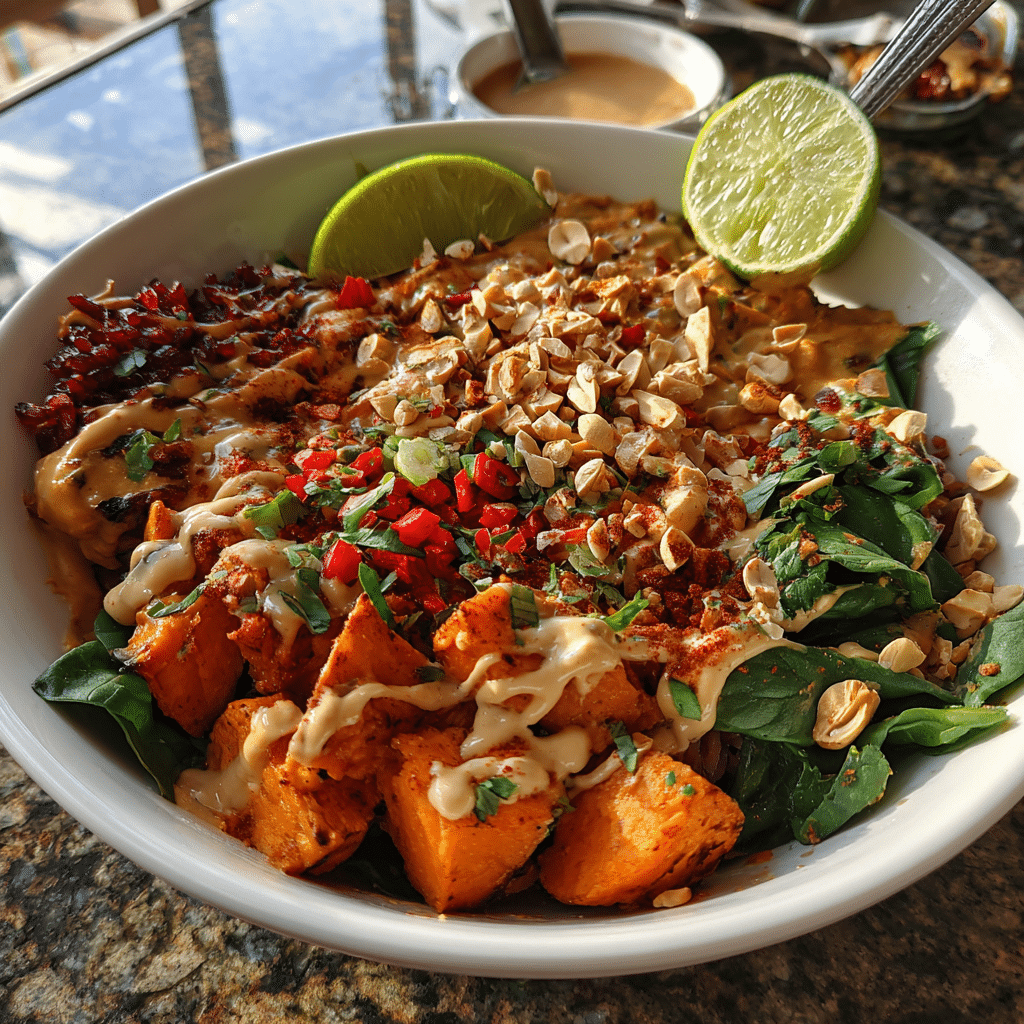
Hey there! I’m Emeli, and let me tell you about the night everything changed in my kitchen. I was standing there, staring at the same old chicken breast I’d cooked a hundred times, feeling completely uninspired. My body was craving something vibrant, nourishing, and packed with flavor but I didn’t want to spend hours cooking. That’s when I remembered a tiny Thai restaurant I’d stumbled upon during my travels through Bangkok, where I watched a street vendor assemble these gorgeous rainbow bowls with the most incredible peanut sauce I’d ever tasted.
I rushed home and started experimenting, and that’s how this Thai Peanut Sweet Potato Buddha Bowl was born. This recipe promises to deliver restaurant-quality flavor in under 45 minutes, with caramelized sweet potatoes, crispy chickpeas, and a creamy peanut sauce that’ll make you want to lick the bowl clean. As someone who’s spent years perfecting plant-based comfort food, I’ve learned that the secret to a crave-worthy Buddha bowl isn’t just throwing ingredients together it’s about balancing textures, layering flavors, and creating that perfect bite where everything comes together.
In this guide, I’ll walk you through selecting the best ingredients, mastering the roasting technique, creating that signature peanut sauce, and customizing this bowl to match your taste preferences. Let’s make something unforgettable together.
Why This Thai Peanut Sweet Potato Buddha Bowl Works
This isn’t just another healthy bowl recipe it’s a complete meal that satisfies on every level. Here’s why it’s become a staple in my kitchen and for thousands of FoodFansy readers:
- Budget-friendly ingredients you already know: Sweet potatoes, chickpeas, and pantry staples create a filling meal for under $3 per serving
- Meal prep champion: Roast everything on Sunday, assemble bowls all week long in just 5 minutes
- Naturally plant-based but never boring: The creamy peanut sauce delivers richness that rivals any meat-based dish
- Texture heaven: Tender roasted sweet potatoes, crispy chickpeas, crunchy vegetables, and silky sauce in every bite
- Adaptable to your cravings: Swap vegetables based on what’s in season or hiding in your crisper drawer
Choosing the Right Ingredients for Thai Peanut Sweet Potato Buddha Bowl
The beauty of a Buddha bowl is its flexibility, but certain ingredients make all the difference between “meh” and “make this again tomorrow.”
Best Sweet Potatoes for This Recipe
Look for medium-sized sweet potatoes with smooth, unblemished skin and a deep orange color. Japanese sweet potatoes (with purple skin and white flesh) work beautifully too, offering a fluffier texture and slightly nutty flavor. Avoid massive sweet potatoes they take forever to roast and often have woody centers. Your sweet potatoes should feel firm and heavy for their size.
Chickpea Selection Tips
Canned chickpeas are your best friend here. I prefer organic brands with minimal sodium, but any variety works. The key is in the prep: rinse them thoroughly under cold water, then pat completely dry with a clean kitchen towel. That extra drying step is what transforms soggy chickpeas into crispy, golden nuggets. If you’re batch cooking, roast multiple cans at once they store beautifully in the fridge for up to 5 days.
Fresh Vegetable Substitutions
The vegetables in your Buddha bowl are completely customizable. Traditional options include shredded red cabbage, julienned carrots, cucumber ribbons, and fresh cilantro. But feel free to use what you love: thinly sliced bell peppers, edamame, snap peas, baby spinach, or massaged kale. The rule? Include at least one crunchy element, one leafy green, and something with color contrast.
Ingredients & Prep for Thai Peanut Sweet Potato Buddha Bowl
Sweet Potato and Chickpea Prep Essentials
Start by peeling your sweet potatoes (or leave the skin on for extra fiber and nutrients I do both depending on my mood). Cube them into uniform 1-inch pieces. This consistency matters: too small and they’ll dry out, too large and they won’t caramelize properly. For the chickpeas, after rinsing and drying thoroughly, you can optionally remove the loose skins it takes an extra few minutes but creates even crispier results.
Peanut Sauce Base
This is where the magic happens. You’ll need natural peanut butter (the kind where oil separates on top it creates a silkier sauce), soy sauce or tamari for depth, fresh lime juice for brightness, minced garlic for bite, grated fresh ginger for warmth, maple syrup for balance, and warm water to achieve that perfect pourable consistency. Pro tip: let your sauce sit for at least 10 minutes before serving. This resting time allows the garlic and ginger to mellow while the flavors marry together beautifully.
Pantry Staples
Keep these on hand: extra virgin olive oil for roasting, flaky sea salt and freshly ground black pepper, and optional chili flakes if you like heat. I also love adding a sprinkle of sesame seeds and a squeeze of fresh lime just before serving.
Step-by-Step Cooking Instructions for Thai Peanut Sweet Potato Buddha Bowl
Pre-Cooking Prep for Thai Peanut Sweet Potato Buddha Bowl
Preheat your oven to 400°F (200°C) this high heat is essential for caramelization. Line two baking sheets with parchment paper (one for sweet potatoes, one for chickpeas). Toss your cubed sweet potatoes with 2 tablespoons of olive oil, a generous pinch of salt, and freshly cracked pepper. Spread them in a single layer with space between each piece crowding creates steam instead of that coveted golden crust. For the chickpeas, toss them separately with 1 tablespoon olive oil and a pinch of salt.
Cooking Method for Thai Peanut Sweet Potato Buddha Bowl
Slide both baking sheets into your preheated oven. The sweet potatoes go on the middle rack and need 25-30 minutes total. Set a timer for 15 minutes when it goes off, give them a good flip with a spatula. This ensures even browning on multiple sides. The chickpeas roast on the upper rack for about 20 minutes. Give them a shake halfway through. You’ll hear them rattling in the pan when they’re getting crispy that’s your auditory cue they’re nearly done.
Doneness Check for Thai Peanut Sweet Potato Buddha Bowl
Your sweet potatoes are ready when they’re fork-tender with deep golden-brown edges, almost caramelized spots, and maybe even a few crispy corners. They should yield easily when pierced but still hold their shape. The chickpeas should be crispy on the outside with a satisfying crunch, but still tender inside not rock hard. If they’re not crispy enough, give them another 5 minutes.
Resting for Thai Peanut Sweet Potato Buddha Bowl
This step is easy to skip, but don’t. Let your roasted components rest on the baking sheets for 5 minutes before assembling your bowls. The sweet potatoes will firm up slightly, making them easier to handle, and their flavors will concentrate. The chickpeas will continue crisping as they cool. This brief rest enhances both texture and taste, taking your bowl from good to extraordinary.
Pro Tips for Perfect Thai Peanut Sweet Potato Buddha Bowl
Avoiding Mushy Sweet Potatoes
The number one mistake? Overcrowding the pan. When sweet potato cubes touch each other, they steam instead of roast. Use two baking sheets if needed. Also, don’t flip them too early let that first side develop a golden crust before turning. And resist the urge to lower the oven temperature. That 400°F heat is what creates caramelization.
Tool Recommendations for Thai Peanut Sweet Potato Buddha Bowl
Invest in rimmed baking sheets they prevent oil from dripping into your oven. A quality vegetable peeler makes sweet potato prep faster. For the peanut sauce, a small blender or food processor creates the smoothest consistency, but a whisk and bowl work perfectly fine. Wide, shallow bowls show off your beautiful creation better than deep bowls.
Storage & Reheating
Store each component separately in airtight containers in the fridge. Sweet potatoes and chickpeas last 4-5 days; fresh vegetables 3-4 days; peanut sauce up to a week. To reheat, spread sweet potatoes and chickpeas on a baking sheet and warm at 350°F for 10 minutes this restores their texture. Don’t microwave them or they’ll go soggy. Assemble bowls with room temperature or cold vegetables for the best contrast.
Flavor Variations for Thai Peanut Sweet Potato Buddha Bowl
Spicy Kick Version
Transform this into a fiery bowl by adding sriracha or sambal oelek to your peanut sauce. Toss the chickpeas with cayenne pepper or chili powder before roasting. Top your finished bowl with sliced jalapeños, Thai bird chilies, or a drizzle of chili oil. The heat plays beautifully against the sweet potatoes’ natural sweetness.
Protein-Packed Option
While chickpeas provide solid plant-based protein, you can level up by adding baked tofu, tempeh crumbles, or edamame. Marinate cubed tofu in soy sauce and sesame oil, then roast alongside your sweet potatoes. Or crumble tempeh and sauté with garlic and ginger. For a non-vegetarian version, top with grilled chicken or seared shrimp.
Global Flavor Twists
This table shows how to adapt your bowl to different cuisine styles:
| Flavor Profile | Sauce Modification | Additional Toppings | Vegetable Swaps |
|---|---|---|---|
| Korean-Inspired | Add gochujang paste and rice vinegar | Kimchi, sesame seeds, gochugaru | Pickled daikon, Korean radish |
| Japanese Style | Use miso instead of soy sauce, add sesame oil | Nori strips, pickled ginger, furikake | Shiitake mushrooms, edamame |
| Mediterranean | Replace peanut butter with tahini | Feta cheese, olives, za’atar | Cherry tomatoes, cucumber, red onion |
| Indian-Spiced | Add curry powder and coconut milk | Cilantro chutney, mango chutney | Cauliflower, spinach, chickpeas |
| Mexican Fusion | Add chipotle peppers and cumin | Avocado, black beans, corn | Bell peppers, jalapeños, radishes |
Serving Suggestions for Thai Peanut Sweet Potato Buddha Bowl
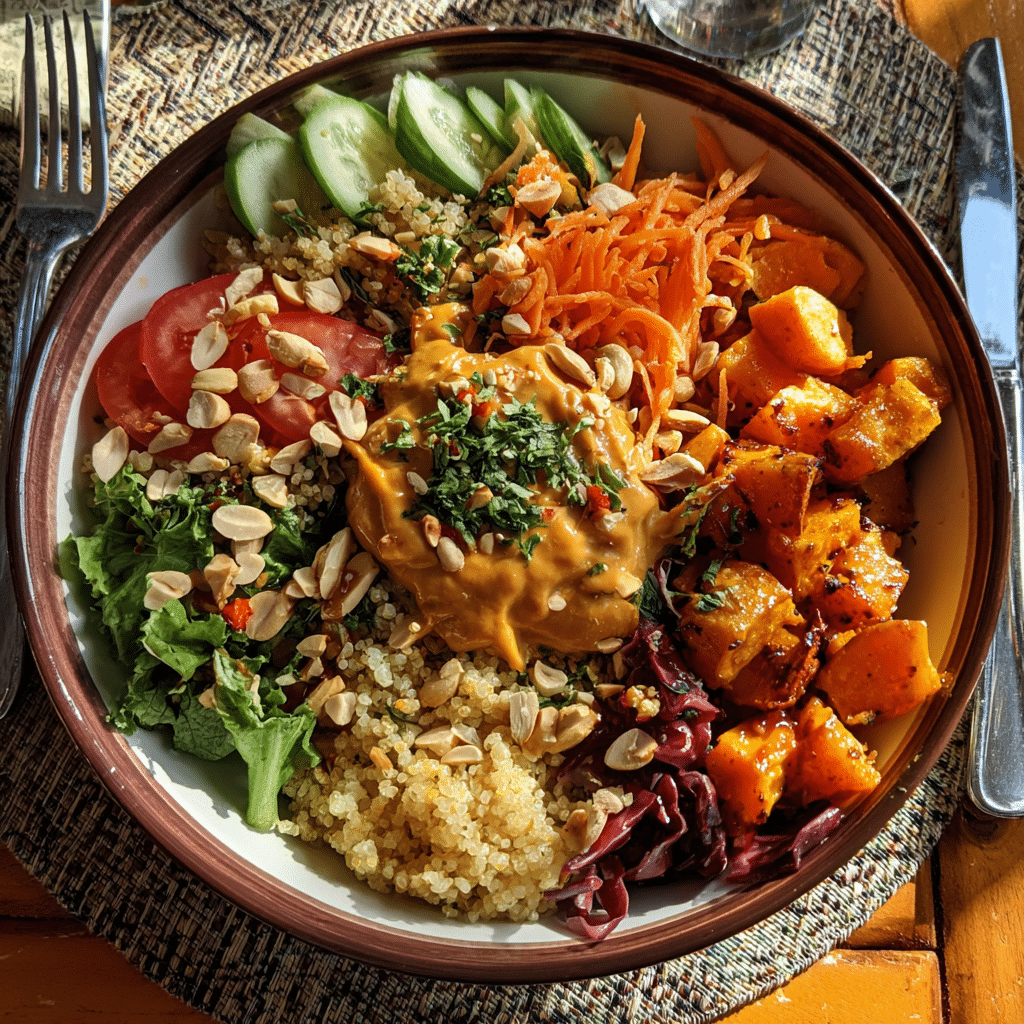
The art of assembling your bowl matters. Start with a base of cooked quinoa, brown rice, or cauliflower rice. Arrange your roasted sweet potatoes and crispy chickpeas in separate sections this creates visual appeal and lets each component shine. Add your fresh vegetables in their own zones: ribbons of purple cabbage, matchstick carrots, cucumber slices. Drizzle that gorgeous peanut sauce generously over everything, then finish with fresh cilantro, crushed peanuts, lime wedges, and sesame seeds.
For pairing, this bowl plays well with light, refreshing beverages. Try an iced green tea, a crisp Riesling, or a hoppy IPA that complements the peanut sauce’s richness. If you’re serving this for dinner guests, prep all components in advance and let everyone build their own bowls it’s interactive and fun.
Make it a complete meal by serving with spring rolls, miso soup, or a simple Asian-style cucumber salad dressed with rice vinegar and sesame oil.
FAQs About Thai Peanut Sweet Potato Buddha Bowl
Can I use frozen sweet potatoes? Fresh is always best for roasting. Frozen sweet potatoes release too much moisture and won’t caramelize properly. However, you can roast fresh sweet potatoes, freeze them, and reheat later just expect slightly softer texture.
How do I make this nut-free? Substitute sunflower seed butter or tahini for the peanut butter in the sauce. Both create creamy, delicious results. For topping, use roasted sunflower seeds instead of crushed peanuts.
Can I meal prep this entire recipe? Absolutely! This is a meal prep superstar. Roast your sweet potatoes and chickpeas on Sunday, store separately, and assemble fresh bowls throughout the week. Keep the sauce in a jar and shake before using. Prep vegetables the night before at most they lose crunch after 1-2 days.
What if my peanut sauce is too thick? Simply whisk in warm water, one tablespoon at a time, until you reach your desired consistency. It should be pourable but still coat the back of a spoon. Remember, the sauce thickens as it sits in the fridge, so you may need to thin it again before serving.
Is this recipe suitable for special diets? Yes! It’s naturally vegan, and easily made gluten-free by using tamari instead of soy sauce. It’s also dairy-free and can be adjusted for keto by substituting the sweet potatoes with roasted cauliflower and using a sugar-free sweetener in the sauce.
Let’s Make This Bowl Together
There’s something magical about a meal that nourishes your body and satisfies your taste buds in equal measure. This Thai Peanut Sweet Potato Buddha Bowl has become a beloved recipe in the FoodFansy community because it delivers on every front it’s healthy without feeling restrictive, flavorful without being complicated, and beautiful enough to make you feel like you’re dining at your favorite restaurant.
If you enjoyed this recipe, be sure to share it with your friends or save it for later! I’d love to see your unique twist feel free to post your photos on Pinterest!
Thai Peanut Sweet Potato Buddha Bowl: Powerful 30-Min Healthy Win
- Total Time: 45
- Yield: 4 1x
Description
This vibrant Thai Peanut Sweet Potato Buddha Bowl combines caramelized roasted sweet potatoes, crispy chickpeas, fresh crunchy vegetables, and a creamy homemade peanut sauce. It’s a complete plant-based meal that’s ready in under 45 minutes and perfect for meal prep!
Ingredients
FOR THE BOWL:
2 large sweet potatoes, peeled and cubed into 1-inch pieces
1 can (15 oz) chickpeas, drained, rinsed, and patted dry
3 tablespoons olive oil, divided
Salt and black pepper to taste
2 cups cooked quinoa or brown rice
2 cups shredded red cabbage
1 large carrot, julienned
1 cucumber, sliced or ribboned
1/2 cup fresh cilantro, chopped
2 tablespoons crushed peanuts
1 tablespoon sesame seeds
Lime wedges for serving
FOR THE PEANUT SAUCE:
1/2 cup natural peanut butter
3 tablespoons soy sauce or tamari (for gluten-free)
2 tablespoons fresh lime juice
2 cloves garlic, minced
1 tablespoon fresh ginger, grated
2 tablespoons maple syrup
4–6 tablespoons warm water (to thin)
Optional: 1/2 teaspoon chili flakes for heat
Instructions
1. Preheat your oven to 400°F (200°C). Line two baking sheets with parchment paper.
2. Toss the cubed sweet potatoes with 2 tablespoons olive oil, salt, and pepper. Spread them in a single layer on one baking sheet, making sure they don’t touch.
3. On the second baking sheet, toss the dried chickpeas with 1 tablespoon olive oil and a pinch of salt. Spread in a single layer.
4. Place both baking sheets in the oven. Roast sweet potatoes for 25-30 minutes, flipping halfway through at the 15-minute mark. Roast chickpeas for 20 minutes, shaking the pan halfway through.
5. While the vegetables roast, make the peanut sauce: In a bowl, whisk together peanut butter, soy sauce, lime juice, minced garlic, grated ginger, and maple syrup. Add warm water 1 tablespoon at a time until you reach a smooth, pourable consistency.
6. Let the peanut sauce sit for at least 10 minutes to allow the flavors to meld together.
7. Remove the sweet potatoes and chickpeas from the oven when done. Sweet potatoes should be fork-tender with golden, caramelized edges. Chickpeas should be crispy outside. Let them rest for 5 minutes.
8. Prepare your fresh vegetables: shred the cabbage, julienne the carrot, slice the cucumber, and chop the cilantro.
9. To assemble each bowl: Start with a base of cooked quinoa or brown rice. Arrange the roasted sweet potatoes, crispy chickpeas, shredded cabbage, julienned carrots, and cucumber slices in separate sections.
10. Drizzle the peanut sauce generously over the entire bowl. Top with fresh cilantro, crushed peanuts, sesame seeds, and a lime wedge.
11. Serve immediately and enjoy! Squeeze the lime wedge over your bowl just before eating for extra brightness.
Notes
Storage Tips: Store each component separately in airtight containers in the refrigerator. Sweet potatoes and chickpeas last 4-5 days, fresh vegetables 3-4 days, and peanut sauce up to 1 week.
Reheating: To restore texture, reheat sweet potatoes and chickpeas on a baking sheet at 350°F for 10 minutes. Don’t microwave or they’ll get soggy.
Customization: Swap vegetables based on what’s in season. Try bell peppers, snap peas, edamame, or baby spinach.
Make it Nut-Free: Substitute sunflower seed butter or tahini for the peanut butter. Use roasted sunflower seeds instead of peanuts for topping.
Protein Boost: Add baked tofu, tempeh crumbles, or grilled chicken for extra protein.
Spicy Version: Add sriracha or sambal oelek to the peanut sauce, or toss chickpeas with cayenne pepper before roasting.
Meal Prep Friendly: This recipe is perfect for weekly meal prep. Roast all components on Sunday and assemble fresh bowls throughout the week.
- Prep Time: 15
- Cook Time: 30
- Category: Main Course
- Method: Roasting
- Cuisine: Thai-Inspired
Nutrition
- Serving Size: 1 bowl
- Calories: 485
- Sugar: 18g
- Sodium: 620mg
- Fat: 20g
- Saturated Fat: 3g
- Unsaturated Fat: 15g
- Trans Fat: 0g
- Carbohydrates: 65g
- Fiber: 12g
- Protein: 15g
- Cholesterol: 0mg
Keywords: thai peanut sweet potato buddha bowl, vegan buddha bowl, plant-based dinner, meal prep bowl, sweet potato chickpea bowl, peanut sauce recipe, healthy dinner bowl