
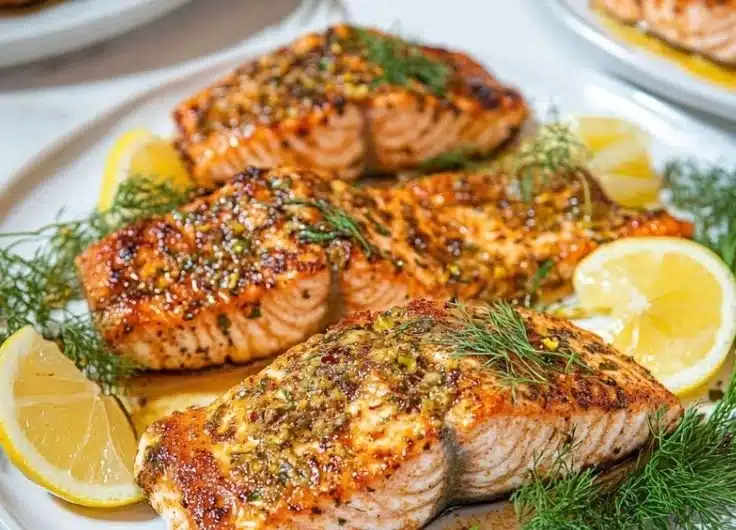
why make this recipe
Baked Dijon Salmon is a wonderful dish that combines the rich flavor of salmon with the tangy sweetness of Dijon mustard and honey. Not only is it simple to prepare, but it’s also healthy and satisfying. Salmon is packed with omega-3 fatty acids, which are great for heart health, and this recipe elevates the fish’s natural flavor without overpowering it. Whether you’re hosting dinner guests or looking for a quick weeknight meal, this recipe is versatile and convenient. It can easily fit into various diets and can be served with different sides, making it a staple recipe for anyone who enjoys cooking with seafood.
how to make Baked Dijon Salmon
Making Baked Dijon Salmon is an easy process that requires just a few simple steps. Below, you will find a detailed guide to preparing this meal, along with all the ingredients you will need.
Ingredients:
- 4 salmon fillets (6 oz each)
- 3 tbsp Dijon mustard
- 2 tbsp honey
- 3 cloves garlic, minced
- 2 tbsp fresh lemon juice
- 2 tbsp fresh dill or parsley, chopped
- Salt and pepper to taste

Directions:
Preheat the Oven: Start by preheating your oven to 400°F (200°C). This temperature is ideal for baking salmon, allowing it to cook evenly and retain moisture.
Prepare the Baking Dish: Lightly spray a baking dish with nonstick cooking spray. This step will prevent the salmon from sticking and ensure that it comes out cleanly once it’s baked.
Make the Marinade: In a small bowl, whisk together the Dijon mustard, honey, minced garlic, and lemon juice until smooth. The combination should create a thick and fragrant marinade that you will use on the salmon. The Dijon mustard gives a zesty flavor, while honey adds a touch of sweetness that balances out the dish.
Prepare the Salmon: Place the salmon fillets skin-side down in the prepared baking dish. This positioning allows the flesh of the salmon to absorb the marinade effectively. Season each fillet generously with salt and pepper according to your taste preferences.
Add the Marinade: Drizzle half of the marinade over the salmon, ensuring that each fillet is well-coated. This extra layer of flavor will enhance the dish as it bakes.
Bake: Put the baking dish in the preheated oven and bake for 15-20 minutes. The exact baking time may vary slightly based on the thickness of the salmon. You can tell it’s done when the salmon flakes easily with a fork and the glaze looks bubbly and caramelized.
Garnish and Serve: Once out of the oven, sprinkle fresh dill or parsley on top of the salmon for a pop of color and added flavor. Serve your Baked Dijon Salmon with your favorite sides.
how to serve Baked Dijon Salmon
Baked Dijon Salmon can be served in several delightful ways. You can pair it with sides such as roasted vegetables, a fresh salad, or some fluffy couscous. A light quinoa or brown rice pilaf also complements the dish beautifully, providing a hearty base. For a more substantial meal, consider adding creamy mashed potatoes. Lemon wedges are a great addition on the side, allowing your guests to squeeze fresh lemon juice over the fish for an extra tang. This dish looks elegant on the plate, making it suitable for both casual weeknight dinners and special occasions.
how to store Baked Dijon Salmon
If you have leftovers (which is often the case as the dish is so delicious!), it’s important to store them properly. Allow the salmon to cool to room temperature before wrapping it tightly in aluminum foil or placing it in an airtight container. Store leftovers in the refrigerator, where they can last for up to three days. To reheat, you can either place it in the oven at a low temperature or use a microwave. Be cautious not to overheat, as salmon can become dry if cooked for too long. If you know you won’t finish the salmon within a few days, consider freezing it. Wrap it well, and it will last for up to three months in the freezer.
tips to make Baked Dijon Salmon
Choose Fresh Salmon: The quality of the salmon used will greatly affect the taste of the dish. Look for fillets that are bright and moist, with a fresh, ocean-like smell.
Experiment with Marinade: Don’t hesitate to adjust the marinade ingredients to suit your tastes. You might want to add a bit of soy sauce for a savory kick or some ginger for a different flavor profile.
Herb Variations: Fresh dill or parsley works well with this recipe, but you can also try other herbs like cilantro or basil for a different twist.
Add Veggies: For a complete meal, you can add vegetables to the baking dish. Toss some asparagus, bell peppers, or zucchini in olive oil, salt, and pepper, and place them around the salmon for a one-pan meal.
Use a Meat Thermometer: If you’re unsure if the salmon is cooked through, using a meat thermometer can help. The internal temperature should reach 145°F (63°C) for safe eating.
variation
While this Baked Dijon Salmon recipe is fantastic as is, there are several variations you can try to mix it up. For example:
- Honey Mustard Glaze: Replace the Dijon mustard with whole grain mustard for a nutty texture and taste.
- Spicy Option: Add a teaspoon of chili flakes or a splash of hot sauce to the marinade if you enjoy a bit of heat.
- Citrus Twist: Swap the lemon juice for orange juice for a sweeter flavor, which pairs exceptionally well with salmon.
- Breadcrumb Topping: For an added crunch, consider sprinkling some seasoned breadcrumbs on top of the salmon before baking.
Each of these variations allows you to explore different flavors and textures while keeping the essence of the original recipe.
FAQs
Can I use frozen salmon fillets for this recipe?
Yes, you can use frozen salmon, but it’s essential to thaw them thoroughly before cooking. You can thaw them in the refrigerator overnight or place them in a sealed plastic bag and submerge in cold water for quick thawing.
How do I know when salmon is fully cooked?
Salmon is cooked when it easily flakes with a fork and has an internal temperature of 145°F (63°C). If you have a meat thermometer, it’s a great tool to ensure that your salmon is perfectly done.
Can I prepare the marinade in advance?
Absolutely! You can make the marinade a day or two ahead of time and store it in the refrigerator in a covered container. Just give it a quick stir before using it with your salmon.
What sides go best with Baked Dijon Salmon?
Excellent side options include steamed vegetables, quinoa, brown rice, mashed potatoes, or a light salad. The choice depends on your taste and the occasion. You can mix and match based on what you have on hand or what you’re in the mood for.
Can I cook Baked Dijon Salmon on the grill?
Yes, you can absolutely adapt this recipe for grilling! Just prepare the salmon in the same way, then grill over medium heat, cooking for about 5-7 minutes on each side, depending on the thickness of the fillets. Just be cautious to avoid sticking; oil the grill grates beforehand.
Baked Dijon Salmon is not just a meal; it’s an experience that brings joy to the table. With its straightforward preparation and delectable flavors, it’s bound to become a beloved recipe in your home. Enjoy your cooking journey!
Print
Baked Dijon Salmon
- Total Time: 30 minutes
- Yield: 4 servings 1x
- Diet: Paleo
Description
A simple and healthy dish that combines salmon with a tangy Dijon mustard and honey glaze.
Ingredients
- 4 salmon fillets (6 oz each)
- 3 tbsp Dijon mustard
- 2 tbsp honey
- 3 cloves garlic, minced
- 2 tbsp fresh lemon juice
- 2 tbsp fresh dill or parsley, chopped
- Salt and pepper to taste
Instructions
- Preheat your oven to 400°F (200°C).
- Prepare a baking dish by lightly spraying it with nonstick cooking spray.
- Make the marinade by whisking together the Dijon mustard, honey, minced garlic, and lemon juice in a small bowl.
- Place the salmon fillets skin-side down in the baking dish.
- Season each fillet generously with salt and pepper.
- Drizzle half of the marinade over the salmon, ensuring each fillet is well-coated.
- Bake for 15-20 minutes, until salmon flakes easily with a fork.
- Garnish with fresh dill or parsley before serving.
Notes
Use fresh salmon for the best taste and experiment with different herbs or marinades.
- Prep Time: 10 minutes
- Cook Time: 20 minutes
- Category: Main Course
- Method: Baking
- Cuisine: Seafood
Nutrition
- Serving Size: 1 fillet
- Calories: 350
- Sugar: 5g
- Sodium: 400mg
- Fat: 12g
- Saturated Fat: 4g
- Unsaturated Fat: 6g
- Trans Fat: 0g
- Carbohydrates: 15g
- Fiber: 0g
- Protein: 45g
- Cholesterol: 75mg
Keywords: salmon, baked, healthy, simple, dinner